Training Modules
Inspectors, Liability & Penalties
As a retailer or retail employee who is soon to be certified to sell alcohol to customers, it is important that you understand the liability you take on personally and for your employer when selling alcohol. This section will outline that liability, the role and powers of inspectors, and penalties that can be imposed on you and your employer.
Inspectors
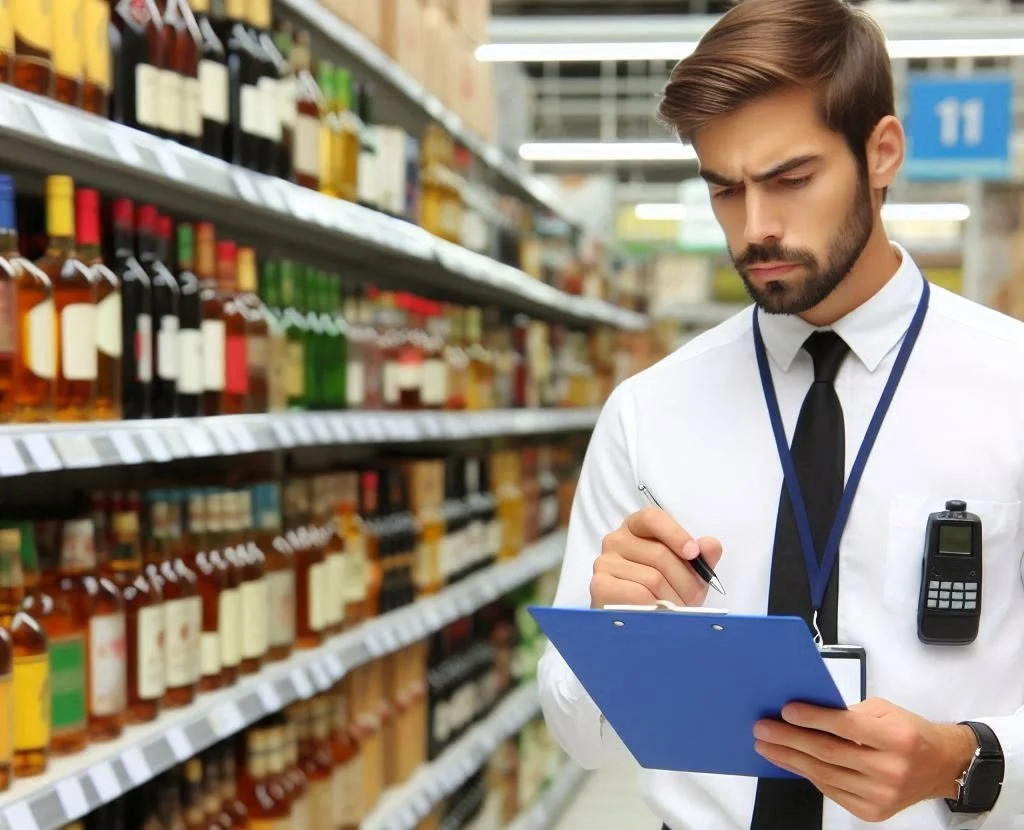
The Alcohol and Gaming Commission of Ontario (AGCO) utilizes inspectors to monitor compliance with the Liquor Licence and Control Act, 2019, its regulations and the standards and requirements established by the AGCO Registrar. Inspectors can:
Enter business premises at their sole discretion
Examine relevant records and items
Demand the production of records or any other thing that is relevant to the inspection
On issuing a written receipt for it, remove a record or any other thing that is relevant to the inspection for review, examination, testing or copying
Take photographs or recordings
Use business data systems to generate readable records
Investigate financial transactions and related matters
If an inspector issues a written demand specifying the nature of records or items required, licensees are obligated to produce these items and provide reasonable assistance for their interpretation or reproduction.
A record or other thing that has been removed for review, examination, testing or copying, must be made available on request to the person from whom it was removed and at a time and place that are convenient for the person and for the inspector and shall be returned to the person within a reasonable time, unless, in the case of a thing that has been subject to testing, the thing has been made unsuitable for return as a result of the testing.
An inspector conducting an inspection may seize anything the inspector discovers that the inspector reasonably believes not to be in compliance with the Liquor Licence and Control Act, 2019, its regulations or the standards and requirements established by the Registrar.
Licensees must not obstruct, hinder, or interfere with inspectors during their inspections and should refrain from providing false information. Licensees must facilitate all inspections conducted by the AGCO. Whenever possible, store managers should be summoned to assist inspectors in accessing necessary alcohol products or business records for inspection purposes.
Civil Liability
As a retailer or member of a retail team selling alcohol, it's crucial to understand that there are specific circumstances where you may be held civilly liable for the sale of liquor. If alcohol is sold to someone whose condition is such that consuming the liquor would apparently intoxicate the person or increase their intoxication so that they would be in danger of causing injury to themselves or injury or damage to another person or another person’s property. Depending on the injury or damage, both you and your employer could face legal risks and potentially be civilly sued.
Penalties
In Ontario, it is a violation of the law to knowingly sell or supply liquor to anyone who is or appears to be under the age of 19. It is also an offence to knowingly furnish false information in any application under the Liquor Licence and Control Act, 2019, or contravening any provision of the LLCA or its regulations. Upon conviction of an offence, penalties may include fines and imprisonment.
In addition, if a licensed retailer is found to be non-compliant with the LLCA, its regulations or the Registrar's Standards, the licensee may be subject to regulatory action issued by the AGCO such as, for example, verbal or written warnings, orders of monetary penalties, suspension or revocation of a licence.